Philipp Blechinger
Dr.-Ing. Business and Engineering (TU Berlin)
Head of Unit
+49 (0)30 1208 434 40 philipp.blechinger@rl-institut.de
Activities
- Project manager and head of the Research Unit Off-Grid Systems
- Head of the RLS Graduate School energy system transition
- Development of research ideas and projects in the fields of rural electrification and island energy systems
- Energy system modelling and international research on decentralized energy transition
Personal Information
Philipp is an international expert in island energy supply and rural electrification. He conducted a PhD in engineering about “Barriers to implementing renewable energies on Caribbean islands” at the TU Berlin. This dissertation was founded by the Reiner Lemoine-Foundation and supervised by Prof. Frank Behrendt and Prof. Ortwin Renn. Previously, he studied business and engineering at the TU Berlin and graduated with very good grades.
In 2019 Philipp was appointed Visiting Scholar in the Renewable and Appropriate Energy Laboratory (RAEL) of the University of California, Berkeley as part of the C-BEAR+ project and a selected member of the Arab-German Young Academy of Sciences and Humanities (AGYA) at the Berlin Brandenburg Academy of Sciences and Humanities.
In 2011, he joined the Reiner Lemoine Institut and he focused on the analysis of island energy systems by conducting his PhD project. Additionally, he started to develop the Off-Grid Systems Research Unit, which he is currently heading. Within the Unit, he develops and manages projects and strategic processes. He worked in managing and team positions in many projects and strengthened his competencies for simulating and optimizing hybrid mini-grids and for electrification planning. Apart from that he continuously publishes and shares research results on conferences and in scientific journals acting as reviewer and co-editor as well.
These projects included market studies for hybrid mini-grids on small islands and in off-grid regions (e.g. with Hanwha Q.Cells and Siemens). Additionally he was involved into on-site feasibility studies for PV integration on the Southern Cook Islands and on Bequia (St. Vincent and the Grenadines). Currently, he manages one project improving the rural electrification planning for Nigeria in collaboration with Integration and the GIZ and another one supporting the rural utility JUMEME in its customer management in Tanzania.
Before joining the RLI, Philipp worked from 2009 to 2011 as research assistant at the TU Berlin and at the University of Trinidad and Tobago. There, he developed policy instruments for mitigating greenhouse gas emissions in the power generation sector of Trinidad. Additionally, he gained working experience in the consulting firm Rödl & Partner GbR and in the engineering company teamfürtechnik GmbH.
He is highly motivated to support the international “Energiewende” and improve living conditions in developing countries by facilitating renewable energies and electrification projects. During his project work he visited many Caribbean countries: Barbados, Grenada, Jamaica, St. Kitts & Nevis, St. Vincent & the Grenadines, and Trinidad & Tobago. In addition, he worked on the Cook Islands, in Tanzania and in Nigeria.
Projects

Study on the decarbonization of energy intensive industries in Morocco

OPTiMG – Optimization of integrated mini-grids for water-energy-nutrition in Africa

GreenH2 Philippines – Feasibility study on the integration of green hydrogen technology in off-grid areas in the Philippines

EnDev Digitalisation for scale – Consulting services in the area of energy access through digitalization

H2-Pacific-Islands – Feasibility studies for hydrogen-powered mini-grids on Pacific islands

FAIRberlin: Feminist and Inclusive Research for Climate-Friendly Mobility in Berlin

Development of toolkits and virtual trainings for integrating renewable energies into energy systems of Pacific islands

Feasibility study on the use of mini-grids in Papua New Guinea

Online training: Energy supply for islands in Latin America and the Caribbean

High Power Charging in Berlin

Feasibility study for hybrid mini-grids in Mozambique

PeopleSuN: Optimizing off-grid electricity supply systems in Nigeria

open_plan: Bottom-up energy transition

Wine to Energy

EnerSHelf

E-LAND

C-BEAR+

Geo-spatial Assessment of Mini-Grid Potentials in Nigeria

Nigerian Energy Support Programme II

PeopleSuN – definition project

Study on Renewable Energy Off-Grid Components of NDCs and their Role for Climate Change Mitigation

Sector coupling of energy and transport in development cooperation

Berkeley-Berlin Energy Access Group

Prioritization of locations for off-grid rural electrification in Tanzania

RISETI Travelling Conferences

EnerPHIL

ASEP_Phil – Technical Assistance for Access to Sustainable Energy in the Philippines

The European Portfolio on Energy in International Development Cooperation: setting up an inventory and regular updating system (EPEIDC)

Handbook on sizing solar-hybrid mini-grid systems in East Africa

Rural electrification modelling in the framework of the Nigerian Energy Support Programme (NESP)
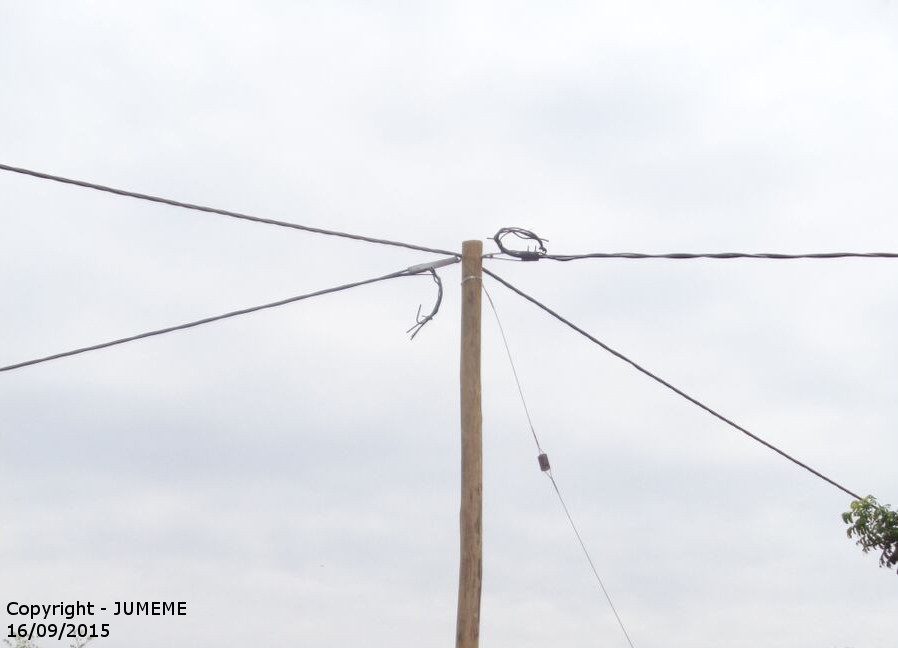
GIS based analysis of project areas and customer tagging
Detection of off-grid regions and potential options of power supply along the example of Kenya
Online-Kurs: Project planning of PV-hybrid power plants (‘Fuelsaver’)

Sub-sector analysis on the market potential for battery storage systems in Tanzania

Assessment of potential for hybridization of diesel power plants on Bequia
Potentials for Compressed Air Energy Storage within the „Energiewende“

Technical Assistance for PV-Battery-Diesel Hybrid Systems on the Cook Islands
Global Analysis of Off-Grid Diesel Capacities

Market Potentials for Hybridization of Diesel-Grids on Islands with Renewable Energies

Market Potentials for Renewable Energies on Islands focusing on the Caribbean, Pacific, and Mediterranean Region

Barriers and solutions to implementing renewable energies on Caribbean islands in respect of technical, economic, political, and social conditions

Aggregation and gap analysis of existing electrification data in Myanmar

solar4food

Off-Grid Site Characterization and Prioritization in Zambia
Global island overview to identify market regions for renewable technologies

EnDev – Knowledge Continuity for Energising Development

GIZ “Vision 100” – 100 % Renewable Energy
